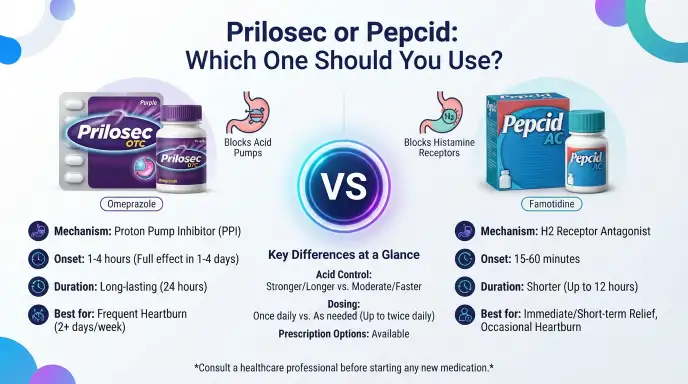
Prilosec and Pepcid both reduce stomach acid, but Prilosec contains omeprazole while Pepcid contains famotidine, so they work in different ways.
People often search for “Prilosec or Pepcid” when they have heartburn, acid reflux, or stomach discomfort and want to know which medicine may be right for their symptoms.
Although both medicines help control stomach acid, they are not the same drug and should not be treated as interchangeable.
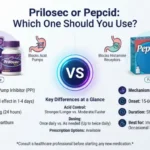
Prilosec is the brand name linked with omeprazole, a proton pump inhibitor (PPI). Pepcid contains famotidine, an H2 blocker.
These two medicine groups reduce stomach acid through different processes. This difference also affects how quickly they work and how they are commonly used.
OTC Prilosec is intended for frequent heartburn. It is not designed to provide fast relief and may take one to four days to reach its full effect.
Pepcid, through famotidine, can begin working within about one to three hours and is used to prevent and treat heartburn caused by acid indigestion.
The right medicine depends on the type and frequency of your symptoms, your other medicines, and your health history.
Always follow the product label and speak with a doctor or pharmacist if you are unsure about using either medicine.
Quick Answer
Prilosec contains omeprazole, while Pepcid contains famotidine. Prilosec is a proton pump inhibitor, and Pepcid is an H2 blocker. Both reduce stomach acid, but they work in different ways.
Prilosec OTC is mainly used for frequent heartburn. The FDA describes frequent heartburn as heartburn that happens two or more days a week.
Prilosec is not intended for immediate relief because it may take one to four days to reach its full effect.
Pepcid contains famotidine and is used to prevent and treat heartburn caused by acid indigestion. H2 blockers such as famotidine generally begin working within one to three hours.
In simple words:
- Prilosec = Omeprazole
- Pepcid = Famotidine
- Prilosec = PPI
- Pepcid = H2 blocker
- Prilosec = for frequent heartburn
- Pepcid = for heartburn prevention and relief
- Prilosec = slower to reach full effect
- Pepcid = generally works faster
Both medicines have useful roles, but the best option depends on the person’s symptoms and medical needs.
Definition and Meaning of Prilosec or Pepcid
What Is Prilosec?
Prilosec is a brand name associated with omeprazole. Omeprazole belongs to a group of medicines called proton pump inhibitors.
PPIs reduce the amount of acid made by the stomach. OTC omeprazole is used to treat frequent heartburn in adults.
Prescription omeprazole may be used for conditions such as GERD, ulcers, and other acid related problems.
Prilosec works by reducing acid production in the stomach. Because of how it works, it is not intended to act as a quick relief medicine for occasional heartburn.
What Is Pepcid?
Pepcid contains famotidine. Famotidine belongs to a group of medicines called H2 blockers.
H2 blockers reduce stomach acid by blocking histamine at H2 receptors in the stomach. Famotidine is used for heartburn and other acid related conditions.
OTC famotidine can be used to prevent and treat heartburn caused by acid indigestion. Prescription famotidine may also be used for conditions such as GERD and ulcers.
Simple Meaning
The simplest difference is:
Prilosec and Pepcid both lower stomach acid, but they use different methods to do it.
Prilosec works through proton pumps involved in acid production. Pepcid works by blocking H2 receptors that help signal acid production.
How Do Prilosec and Pepcid Work?
Understanding how these medicines work can make the difference easier to remember.
How Prilosec Works
Prilosec contains omeprazole. Omeprazole is a proton pump inhibitor.
The stomach uses proton pumps as part of the process that produces acid. Omeprazole reduces acid production by acting on these proton pumps.
This strong reduction in acid is one reason PPIs are used for frequent heartburn and other acid related conditions.
However, Prilosec does not work like a medicine designed for immediate relief. OTC omeprazole may take one to four days to reach its full effect.
How Pepcid Works
Pepcid contains famotidine. Famotidine is an H2 blocker.
Histamine can signal stomach cells to produce acid. Famotidine blocks H2 receptors and reduces this signal. As a result, the stomach produces less acid.
Famotidine generally begins working within one to three hours.
This difference in action helps explain why people may use Prilosec and Pepcid for different types of heartburn problems.
The Origin of Prilosec or Pepcid
Prilosec and Pepcid are brand names, not two different spellings of the same word.
Prilosec is associated with omeprazole, while Pepcid contains famotidine. The medicines belong to separate drug classes.
Omeprazole is a proton pump inhibitor, while famotidine is an H2 blocker. Both drug groups reduce stomach acid, but they do so through different pathways.
The names are also easy to confuse because both are well known medicines used for heartburn and other acid related conditions.
When people search for “Prilosec or Pepcid,” they are usually comparing their uses, effects, and timing rather than comparing spelling.
Prilosec vs Pepcid: Main Differences
| Feature | Prilosec | Pepcid |
| Active ingredient | Omeprazole | Famotidine |
| Drug class | Proton pump inhibitor | H2 blocker |
| Main action | Reduces stomach acid | Reduces stomach acid |
| Common OTC use | Frequent heartburn | Heartburn prevention and relief |
| Speed | May take 1–4 days for full effect | Usually starts within 1–3 hours |
| Immediate relief | No | Can work faster |
| Used for GERD | Yes | Yes |
| Brand | Prilosec / Prilosec OTC | Pepcid / Pepcid AC |
The biggest differences are the active ingredients, drug classes, and timing.
Which One Should You Use?
There is no single medicine that is right for every person.
Your symptoms, how often they happen, your other medicines, and your health history can all affect the choice.
If You Have Frequent Heartburn
OTC Prilosec is intended for frequent heartburn. Frequent heartburn means symptoms that happen two or more days each week.
Because Prilosec is not an immediate relief medicine, it is important to understand that it may take one to four days to reach its full effect.
If you have frequent symptoms, talk with a healthcare professional if you are unsure about the cause or treatment.
If You Have Occasional Heartburn
Pepcid contains famotidine, which is used to prevent and treat heartburn caused by acid indigestion.
Famotidine generally begins working within one to three hours. This makes its timing different from OTC Prilosec.
Follow the directions on the product label and do not take more than directed.
If You Have GERD
Both omeprazole and famotidine are used in the treatment of GERD.
GERD is a condition in which stomach contents can flow back into the esophagus and cause symptoms such as heartburn.
Prescription omeprazole and famotidine can be used for GERD, but the treatment plan depends on the person’s condition.
If you have regular symptoms, a doctor can help determine the cause and recommend suitable treatment.
Prilosec or Pepcid: Which Works Faster?
Speed is one of the clearest differences between the two medicines.
Prilosec
OTC Prilosec may take one to four days to reach its full effect.
It is intended for frequent heartburn rather than immediate relief.
Pepcid
Famotidine generally begins working within one to three hours.
This means Pepcid may provide relief sooner than Prilosec, but this does not mean that it is the right medicine for every person.
The purpose and use of each medicine are different.
Common Mistakes with Prilosec or Pepcid
Mistake 1: Thinking Both Medicines Are the Same
Prilosec and Pepcid are different medicines.
Prilosec contains omeprazole, while Pepcid contains famotidine. They also belong to different drug classes.
Mistake 2: Expecting Prilosec to Give Immediate Relief
One common mistake is taking Prilosec and expecting the heartburn to disappear quickly.
OTC Prilosec may take one to four days to reach its full effect. It is not intended as an immediate relief product.
Mistake 3: Taking More Than the Recommended Amount
Taking more medicine does not mean it will work faster.
Always follow the instructions on the package. If you have questions about the correct dose, ask a doctor or pharmacist.
Mistake 4: Using Prilosec for Too Long
OTC PPIs are intended for a limited course.
The FDA states that OTC PPIs are intended for a 14 day course and can be used up to three times a year.
If you need treatment more often, speak with a healthcare professional.
Mistake 5: Using Pepcid for Too Long Without Medical Advice
OTC famotidine should not be used for longer than two weeks unless a doctor tells you to do so.
If your symptoms continue after this period, contact a healthcare professional.
Mistake 6: Ignoring Other Medicines
People sometimes forget to check for medicine interactions.
Tell your doctor or pharmacist about all prescription medicines, OTC products, vitamins, and supplements you take.
This can help reduce the risk of unwanted interactions.
Prilosec or Pepcid in Everyday Examples
Example 1: Occasional Heartburn
Imagine someone gets heartburn from time to time after eating.
Famotidine, the active ingredient in Pepcid, is used to prevent and treat heartburn caused by acid indigestion.
The person should still follow the product directions.
Example 2: Frequent Heartburn
Imagine someone has heartburn two or more days every week.
OTC omeprazole, the active ingredient in Prilosec OTC, is intended for frequent heartburn in adults.
It is important to remember that Prilosec is not intended for immediate relief.
Example 3: GERD Symptoms
A person with regular acid reflux may have GERD.
Both omeprazole and famotidine can be used in the treatment of GERD, including prescription treatment.
A doctor can decide which treatment is suitable based on the person’s symptoms and health history.
Example 4: Taking Other Medicines
Someone who already takes several medicines should check with a pharmacist or doctor before using an acid reducing medicine.
This is important because omeprazole and famotidine can interact with other medicines.
Prilosec or Pepcid: Safety Tips
Always read the medicine label before using an OTC product.
For Prilosec, follow the package instructions and use it only for the recommended course. OTC PPIs are intended for a 14 day course.
For Pepcid containing famotidine, follow the product directions and do not use it for longer than two weeks unless your doctor tells you to do so.
You should also tell your doctor about medicines, vitamins, and supplements you take.
Some symptoms should not be treated only with OTC heartburn medicine. Seek medical advice if you have serious or unusual symptoms.
Warning signs can include:
- Trouble swallowing
- Chest pain
- Unexplained weight loss
- Vomiting blood
- Black or bloody stools
- Symptoms that do not improve
These symptoms can have causes that need medical attention.
Side Effects of Prilosec and Pepcid
Both medicines can cause side effects.
Prilosec Side Effects
Common side effects of omeprazole may include:
- Headache
- Nausea
- Gas
- Diarrhea
- Constipation
- Vomiting
Not everyone will have these effects.
Serious reactions can also happen. Contact a healthcare professional if you notice a serious or unusual reaction.
Pepcid Side Effects
Common side effects of famotidine may include:
- Headache
- Dizziness
- Constipation
- Diarrhea
Some people can have a serious allergic reaction.
Seek urgent medical help if you have signs of a severe allergic reaction, such as swelling or trouble breathing.
Can Prilosec and Pepcid Be Used Together?
Some people may wonder if they can use both medicines.
Do not combine medicines simply because both reduce stomach acid. The right approach depends on the reason for treatment and your health needs.
If you are thinking about using Prilosec and Pepcid together, ask a doctor or pharmacist first. They can review your symptoms, other medicines, and treatment plan.
This is especially important if you take prescription medicines or have other health conditions.
Prilosec or Pepcid: Usage Data
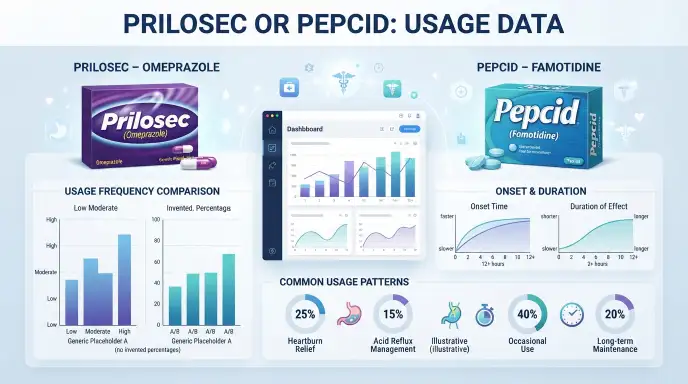
Prilosec OTC and Pepcid are both widely recognized treatments for acid related symptoms, but their OTC uses differ.
The FDA states that OTC PPIs are used for frequent heartburn and may take one to four days to reach their full effect.
H2 blockers such as famotidine generally begin working within one to three hours and can be used to prevent and treat heartburn.
Prescription versions of omeprazole and famotidine have broader uses. They may be used for GERD, ulcers, and other conditions involving stomach acid.
The important point is that the two medicines should not be considered identical simply because they both reduce acid.
Prilosec or Pepcid: Quick Comparison
| Question | Prilosec | Pepcid |
| What is the active ingredient? | Omeprazole | Famotidine |
| What drug group is it? | PPI | H2 blocker |
| Does it reduce stomach acid? | Yes | Yes |
| Can it help heartburn? | Yes | Yes |
| Is it used for frequent heartburn? | Yes | Different OTC use |
| Does it give immediate relief? | No | Generally works sooner |
| How fast does it work? | Full effect may take 1–4 days | Usually begins within 1–3 hours |
| Can it be used for GERD? | Yes | Yes |
| Is it available OTC? | Yes | Yes |
FAQs About Prilosec or Pepcid
1. Are Prilosec and Pepcid the same?
No. Prilosec contains omeprazole, while Pepcid contains famotidine. Omeprazole is a PPI, and famotidine is an H2 blocker.
2. Which works faster, Prilosec or Pepcid?
Pepcid containing famotidine generally starts working within one to three hours. Prilosec may take one to four days to reach its full effect.
3. Is Prilosec used for frequent heartburn?
Yes. OTC omeprazole is intended for frequent heartburn in adults.
4. Is Pepcid used for heartburn?
Yes. Famotidine is used to prevent and treat heartburn caused by acid indigestion.
5. Can Prilosec help with GERD?
Yes. Prescription omeprazole is used to treat GERD and related acid problems.
6. Can Pepcid help with GERD?
Yes. Famotidine can also be used to treat GERD and other acid related conditions.
7. Is Prilosec for immediate relief?
No. OTC Prilosec is not intended for immediate relief. It may take one to four days to reach its full effect.
8. How long can I use OTC Prilosec?
The FDA says OTC PPIs are intended for a 14 day course and can be used up to three times a year.
9. How long can I use OTC Pepcid?
OTC famotidine should not be used for longer than two weeks unless a doctor tells you to do so.
10. Can these medicines interact with other medicines?
Yes. Both medicines can interact with other medicines. Tell your doctor or pharmacist about all medicines, vitamins, and supplements you use.
11. What should I do if heartburn keeps coming back?
If heartburn keeps returning or does not improve with OTC medicine, talk with a doctor. Frequent symptoms may need a proper medical evaluation.
Conclusion
Prilosec and Pepcid both reduce stomach acid, but they are different medicines. Prilosec contains omeprazole, while Pepcid contains famotidine. Omeprazole belongs to the proton pump inhibitor group, and famotidine belongs to the H2 blocker group.
The main difference is how they work and how quickly they act. OTC Prilosec is intended for frequent heartburn and may take one to four days to reach its full effect.
Pepcid contains famotidine, which generally begins working within one to three hours and is used to prevent and treat heartburn caused by acid indigestion.
This does not mean that one medicine is always right for everyone. Your symptoms, their frequency, your other medicines, and your health history all matter. A medicine that works well for one person may not be the right choice for another.
If you have occasional heartburn, read the product label and follow the directions carefully. If you have frequent heartburn, symptoms that continue, or symptoms that return after treatment, speak with a doctor.
Do not keep using OTC medicine for longer than the recommended time without medical advice.
In simple terms, remember this: Prilosec = omeprazole and Pepcid = famotidine. Both reduce stomach acid, but they have different roles, timing, and uses.
Understanding this difference can help you have a better conversation with your doctor or pharmacist about your symptoms and treatment.
Read the Full Guide!

I’m Taylor Brooks, a grammar enthusiast who loves making English writing clearer, simpler, and more accurate. I create helpful grammar tips and practical tools to make writing with confidence easier for everyone.





1 thought on “Prilosec or Pepcid: Which One Should You Use?”